AEA Releases the 10th Edition of the Cultural Infrastructure Index
April 15, 2026
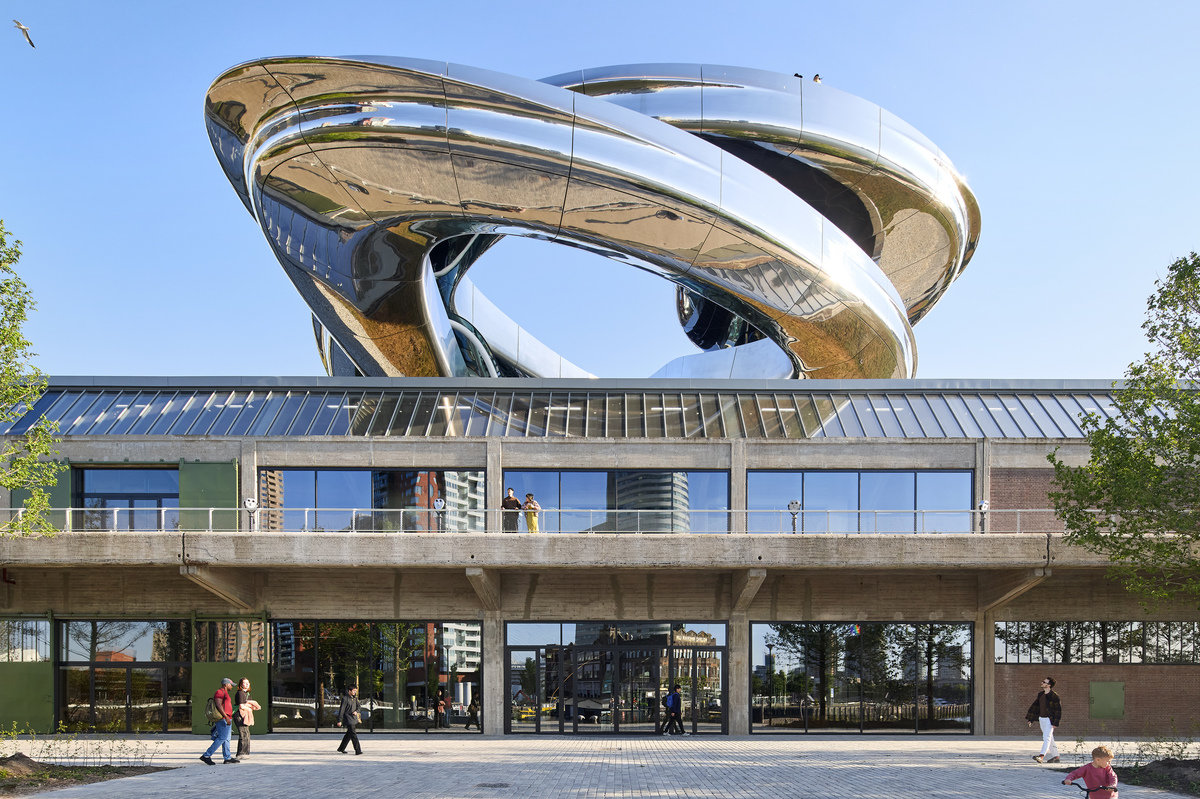
AEA Consulting today released the tenth edition of the Cultural Infrastructure Index (CII). Since 2016 the CII has annually tracked global capital investment in cultural projects with budgets of US$10 million or more that were publicly announced or completed. The 2025 CII examines trends and reflections represented by the completed projects of the past decade, alongside analysis of projects announced or completed in 2025.
The 2025 CII tracked a total of 3,150 major cultural infrastructure projects worldwide between 2016 and 2025. 1,521 of these projects were completed globally, representing $78.7 billion in capital investment. A further 1,629 projects were announced, with a planned capital investment value of $80.6 billion.
Looking at trends across the ten-year period, the number of both announced and completed projects has increased, albeit with fluctuations as completed projects dropped in 2020 and recovered in the post-pandemic period. Meanwhile, the value of investment paints a more complex picture, as 2025 marks both the lowest capital investment in completed projects and the highest in announced projects of any single year, at $5.3 billion and $13.6 billion respectively.
Geographically, North America has remained the dominant region tracked by the Index, accounting for 43% of completed projects in 2025, up from 39% in 2016. By comparison Europe's share of completions has declined across the period – from 37% in 2016 to 27% in 2025. Asia has remained broadly stable, maintaining a share of between 18% and 25%, while a small volume of large projects in the Middle East have led to a consistent number each year with variable investment values. The period has also seen a proportionally small but growing presence from Latin America and Africa.
In addition to tracking the number, type, location, and budgets of cultural infrastructure projects, the qualitative trends documented in the Index deepen the analysis. Audience expectations have increasingly shaped infrastructure planning throughout the decade, particularly since the pandemic which accelerated questions about how venues should earn in-person attendance. Cultural facilities are now expected to function as community infrastructure, focused on an experience that cannot be replicated digitally, with flexible programming, accessible public spaces, and measurable social outcomes built into their briefs. They are increasingly expected to operate simultaneously as artistic venues, civic spaces, educational resources, and environmental actors. Leading architecture firms involved in designing cultural venues noted that sustainability is now a baseline requirement, while sensitivity to issues of ethical stewardship – repatriation, restitution, decolonization, and cultural appropriation – is also now entering the brief.
Over the decade, trends and areas of growing interest in the sector have become clear. Notably, the 2023 CII introduced immersive arts venues as a distinct category, evidencing a cultural shift towards individualised experiences and an audience demand for agency. The 2025 Index introduces libraries as a new category, as recent projects such as The British Library expansion, announced in March 2025, demonstrate their growing function as adaptable civic spaces that develop alongside the communities they serve. Cultural districts have also evolved from organic clusters into policy-driven strategic interventions, informed by clear goals for economic development, tourism, or public diplomacy. The CII highlights four districts that demonstrate how different strategic goals produce distinct investments, including West Kowloon Cultural District (Hong Kong), Lot Fourteen (Adelaide, Australia), Al Quoz Creative Zone (Dubai, UAE), and Orange Development Areas (Bogotá, Colombia). Another key trend is the creation of spaces with indigenous perspectives; over the past 10 years, the Index recorded at least 30 Indigenous-led or focused projects, with over half of these identified in the last four years.
Highlights from the 2025 Cultural Infrastructure Index include:
- In 2025, the Index tracked 452 major cultural infrastructure projects that were completed or announced, the highest annual total since tracking began in 2016. The 267 projects announced in 2025 represent the largest single-year pipeline recorded in the Index's history.
- Public and not-for-profit organisations led delivery in 2025, accounting for 84% of completed projects and 90% of announced projects.
- New York, London, and Shanghai were the three most active cities for completed cultural infrastructure throughout 2016-2025, including 46 projects in New York, 42 in London and 34 in Shanghai. Paris, Washington D.C. and Beijing were also consistent contributors.
- Museums and galleries accounted for the largest share of 2025’s completed projects at 49%, consistent with every year since tracking began. The next most popular typologies were performing arts centers (18%), multifunction venues (10%), and libraries (12%).
- Notable 2025 completions include the Almaty Museum of Arts in Kazakhstan, indicating Almaty’s growing role as a cultural hub; the Quandamooka Arts and Culture Centre on Minjerribah Island, Australia; and the Eco-Museum and Piratininga Waterfront Park in Rio de Janeiro.
- The three projects completed in 2025 with the highest budgets were Le Grand Palais in Paris (US$548 million), The Frick Collection in New York (US$330 million), and the National Medal of Honor Museum in Arlington, Texas (US$270 million). The top three announced budgets were The British Library in London (US$1.4B), Qiddiya Performing Arts Centre in Saudi Arabia (US$1.4B), and The Louvre in Paris (US$813 million).
Explore more of AEA Consulting's findings in the 2025 Cultural Infrastructure Index.
Image Credit: FENIX Museum of Migration, Rotterdam. Photo by Hufton + Crow